 Reviews


 Proudly American


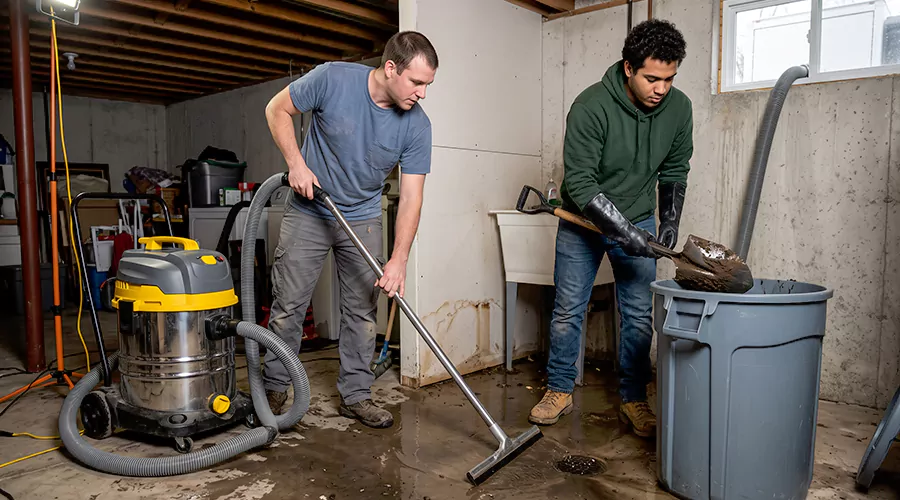
Sewage cleanup often takes about 1 to 3 days for a small contained backup and roughly 3 to 7 days for a larger residential loss. Drying or reconstruction can extend the total recovery beyond one week when wastewater reaches drywall or flooring.
The timeline depends on how far sewage spread and which materials absorbed it. A bathroom backup confined to tile can be much faster than sewage across a finished basement.
What Is the Typical Sewage Cleanup Timeline?
The cleanup process usually moves through wastewater extraction before contaminated materials are removed. Cleaning and disinfection follow. Structural drying can then continue for several days.
| Sewage Loss | Typical Cleanup and Drying Range |
|---|---|
| Small contained area | 1 to 3 days |
| One finished room | 2 to 4 days |
| Several affected rooms | 3 to 7 days |
| Finished basement | 4 to 7+ days |
| Major structural contamination | 1 week or longer |
These are planning ranges. Reconstruction is separate and can add more time.
What Happens During the First Day?
The first day focuses on stopping the backup and controlling contaminated water. Electrical hazards must be addressed before anyone enters standing wastewater.
Early sewage clean up may include:
- Stopping use of affected plumbing.
- Identifying the source of the backup.
- Removing standing sewage.
- Documenting affected materials.
- Removing heavily contaminated porous items.
- Cleaning accessible hard surfaces.
Fast action limits how far wastewater can spread beneath flooring or into lower wall materials.
How Long Does Sewage Water Removal Take?
Sewage water removal can take several hours for a contained room. Large basement losses may require much of a day or longer depending on water depth.
Extraction time depends on:
- Water volume
- Floor area
- Access to the affected space
- Amount of solid contamination
- Whether the backup is still active
Removing visible wastewater is not the end of cleanup. Residue can remain on surfaces after the standing liquid is gone.
How Long Does Cleaning and Disinfection Take?
Cleaning and disinfection can take several hours to several days depending on the affected area. Hard surfaces must be cleaned before a suitable disinfectant is applied because dirt or organic residue can interfere with the product.
A typical sequence is:
- Remove loose contamination.
- Clean hard surfaces with detergent.
- Apply an appropriate disinfectant.
- Follow the required contact time.
- Remove remaining moisture.
- Begin controlled drying.
Never mix bleach with ammonia or other cleaning products. Raw sewage cleanup requires more material removal than clean-water extraction because contamination can penetrate porous building products.
How Long Does Structural Drying Take After Sewage Cleanup?
Structural drying commonly continues for about 2 to 5 days after contaminated water has been removed. Heavily saturated wood can take longer.
Drying may involve:
- Dehumidification
- Air movement
- Exposed framing
- Moisture monitoring
- Removal of materials that block drying
Wet building materials should ideally dry within 24 to 48 hours when possible to reduce mold risk. That target does not mean every large sewage loss will be completely dry in two days.
Which Materials Can Make Cleanup Take Longer?
Porous materials increase cleanup time because they may need removal instead of surface cleaning.
| Material | Typical Effect on Timeline |
|---|---|
| Tile | Usually faster to clean |
| Sealed concrete | Usually manageable |
| Carpet padding | Often requires removal |
| Drywall | May require selective demolition |
| Insulation | Removal can add time |
| Cabinets | Swelling can complicate cleanup |
| Wood subfloor | May need extended drying |
Sewage damage cleanup can continue longer when wastewater has entered several building layers.
How Long Does Basement Sewage Cleanup Take?
A finished basement backup may take four to seven days or longer before repairs begin. Basement sewage often reaches carpet and lower drywall before being discovered.
A finished basement may require:
- Wastewater extraction
- Carpet or padding removal
- Lower drywall removal
- Surface cleaning
- Structural drying
- Moisture verification
Sewage cleanup in basement areas can therefore take much longer than a small toilet overflow on a tile floor.
What Warning Signs Mean Cleanup May Take Longer?
A longer project is likely when contamination has moved beyond visible surfaces.
Watch for these signs:
- Several rooms are affected.
- Drywall feels soft.
- Carpet padding is saturated.
- Cabinets have swollen.
- Flooring begins lifting.
- Wastewater reached insulation.
- Strong odor persists.
- Moisture readings stay high.
- Mold has begun developing.
- Sewage reached a crawl space.
Emergency sewage cleanup can reduce later drying time when extraction begins before wastewater spreads farther.
What Can You Check Yourself During Drying?
A moisture comparison can help show whether exposed materials are moving toward a normal dry condition.
Use this process:
- Select a dry reference material.
- Record its moisture reading.
- Test the affected material.
- Mark the measurement location.
- Repeat the reading the next day.
- Look for steady improvement.
Do not enter contaminated areas without appropriate protection. Avoid electrical equipment near standing wastewater.
When Should You Call a Professional?
Professional sewage cleanup is appropriate when wastewater covers more than a small contained hard-surface area. Electrical exposure or contamination inside finished walls also makes DIY cleanup much harder.
Consider professional help when:
- Several rooms contain sewage.
- Wastewater reaches electrical equipment.
- Drywall is contaminated.
- Insulation becomes wet.
- The backup affects a finished basement.
- A crawl space contains sewage.
- The source cannot be stopped.
- Mold is already visible.
Sewage cleanup and restoration may continue into reconstruction after the contaminated area is clean and dry.
How Can You Prevent Cleanup From Taking Longer?
The fastest cleanup starts with stopping the cause before more wastewater enters the building.
Useful steps include:
- Stop using affected plumbing immediately.
- Investigate recurring slow drains.
- Keep basement storage above floor level.
- Maintain septic systems on schedule.
- Consider a backwater valve where appropriate.
- Respond to new backups promptly.
Conclusion
Sewage cleanup commonly takes 1 to 3 days for a small backup and roughly 3 to 7 days for a larger residential loss. Structural drying can extend the timeline when wastewater reaches walls or flooring. Reconstruction may add several more days or weeks afterward. If sewage reaches electrical components or several finished rooms, professional assessment can help establish a realistic cleanup schedule.
Frequently Asked Questions
Can sewage cleanup be finished in one day?
A very small contained backup may be cleaned in one day, but drying may continue afterward.
How long does a sewage-filled basement take to clean?
A finished basement can require about four to seven days or longer before reconstruction starts.
Does odor disappear when cleanup is complete?
It should improve greatly after contaminated material is removed. Persistent odor can indicate a missed source.
How long should drying equipment run?
Often several days. Moisture readings should guide when equipment is removed.
Does drywall slow sewage cleanup?
Yes. Contaminated drywall may need removal before the wall cavity can be cleaned or dried.
Can rebuilding start immediately after sewage removal?
No. The affected structure should be cleaned and dry enough before new materials are installed.